

In the rapidly evolving digital environment, many new technical terms appear that can confuse readers and online users. One of these terms is optiondiv4. People often come across this term in discussions related to digital systems, online platforms, or interface structures. At first glance, it may look like a complicated technical phrase, but its meaning becomes easier to understand once the concept behind it is explored.
Understanding optiondiv4 helps readers see how modern digital structures are organized. Behind every application, website, or digital system there is a carefully planned structure that keeps everything functioning smoothly. This article explains the meaning of optiondiv4, where it appears, how it works in structured systems, and why it matters in the digital landscape.
What Is Optiondiv4
Optiondiv4 is generally described as a structural label used in digital or technical environments to identify a specific section or container within a sequence of options. The name itself can be understood by breaking it into three parts.
The first part, option, represents a selectable feature or choice within a system. The second part, div, refers to a division or container that groups related elements together. The final part, the number four, simply indicates position in a sequence.
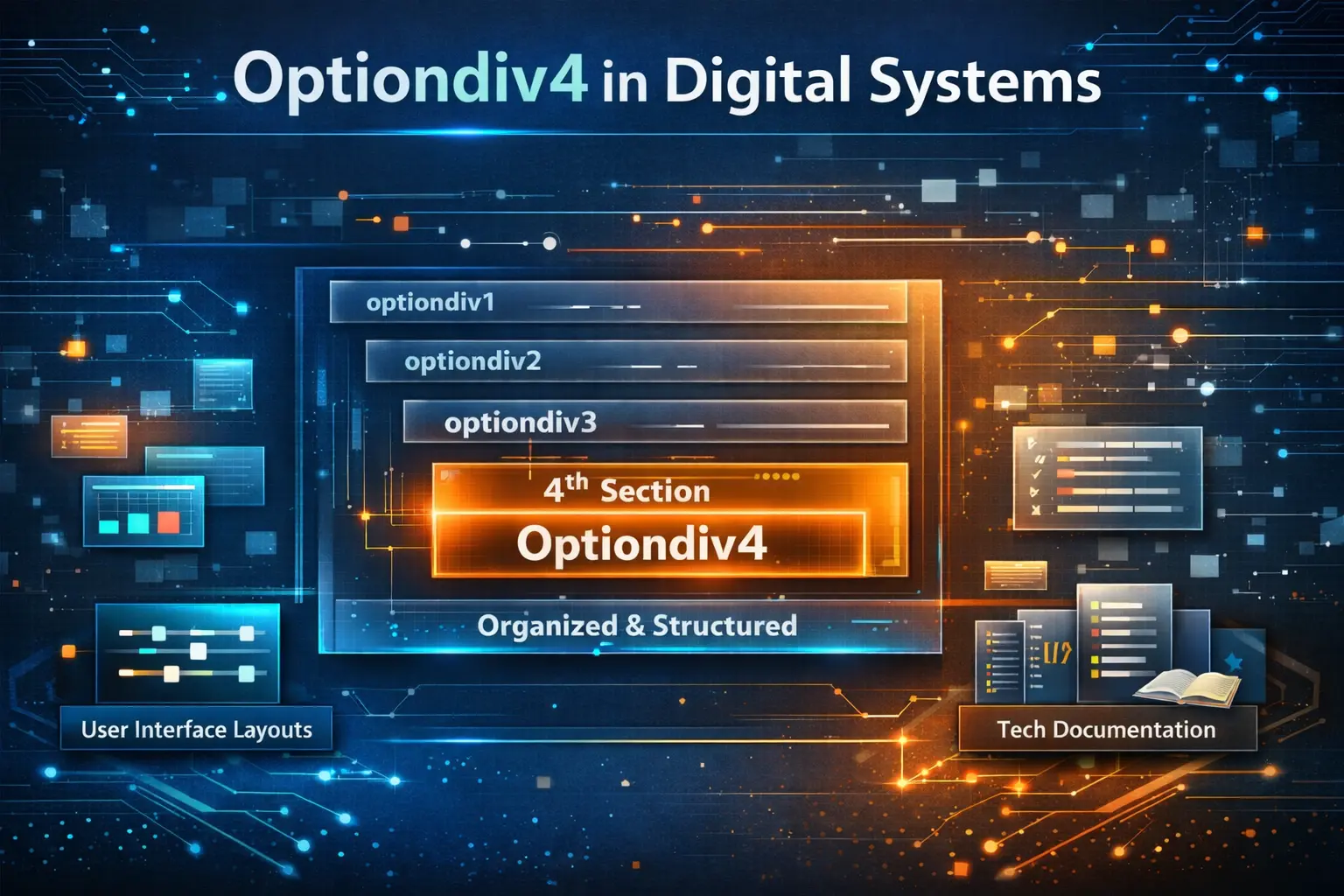
When these components are combined, optiondiv4 usually refers to the fourth section or container in a series of organized options. In many structured systems, elements may be arranged sequentially such as optiondiv1, optiondiv2, optiondiv3, and optiondiv4. Each section represents a specific group of functions or settings within the system.
Why Optiondiv4 Matters in Digital Structures
Modern digital platforms are built with complex frameworks that include multiple tools, options, and navigation elements. Without proper organization, these systems would become confusing and difficult to manage.
Optiondiv4 plays a role in helping developers organize different sections of a digital interface. By assigning labels to different option containers, developers can manage the system more efficiently. Each section becomes easier to locate, update, and maintain.
Another important reason optiondiv4 matters is scalability. As platforms grow and new features are introduced, structured divisions help developers add new elements without disrupting the entire layout. A well-organized system makes future improvements much easier.
HCommon Areas Where Optiondiv4 Appears
Although optiondiv4 is not tied to a single industry or technology, it commonly appears in several digital contexts where structured organization is required.
User Interface Layouts
In many interface designs, developers divide screens into different sections that contain specific functions. These sections might include settings panels, option groups, or configuration tools. Within the internal structure of the system, one of these sections may be labeled as optiondiv4 to represent its position in the sequence.
Modular System Design
Large software systems are often built using modular design principles. This means the system is divided into separate modules that work together to perform complex tasks. In such systems, labels like optiondiv4 help identify individual modules within the structure.
Technical Documentation and Tutorials
In educational materials or coding tutorials, writers sometimes use placeholder labels to explain how structured divisions work. In these explanations, optiondiv4 may appear as an example showing how multiple option containers can be organized within a digital layout.
How Optiondiv4 Supports Organized System Architecture
Digital architecture depends heavily on clear and logical organization. Every feature, setting, or menu must be placed in a structured location so that developers and systems can easily manage it.
Optiondiv4 contributes to this structure by acting as a clearly defined segment within a group of options. Instead of placing all system elements in one large container, developers separate them into smaller divisions. Each division handles a specific set of tasks or functions.
This approach improves system readability and maintainability. When developers revisit a project months or years later, structured labels such as optiondiv4 help them quickly locate the exact section they need to modify.
Another advantage is improved teamwork. When multiple developers collaborate on a project, structured naming systems allow everyone to understand the architecture without confusion.
The Relationship Between Optiondiv4 and User Experience
While most users never see the technical side of digital platforms, internal structures like optiondiv4 still influence the overall user experience. A well-organized interface allows users to navigate menus easily, find settings quickly, and interact with features smoothly.
Behind the scenes, structured option divisions ensure that different parts of the interface load correctly and remain logically grouped. This prevents features from overlapping or appearing in the wrong location.
When digital systems lack proper structure, users may experience disorganized menus or confusing layouts. By maintaining organized containers such as optiondiv4, developers create more stable and user-friendly systems.
Misconceptions About Optiondiv4
Because the term optiondiv4 appears in various online discussions, some people mistakenly believe that it refers to a specific software product or digital platform. In reality, it is usually just a structural label used within development or documentation.
Another misunderstanding is that optiondiv4 represents a complex technical system or algorithm. In most cases, the term simply identifies a position within a structured set of options.
Recognizing this helps readers understand that optiondiv4 is part of a broader organizational approach rather than a standalone technology.
The Growing Importance of Structured Digital Systems
As technology continues to expand, digital systems are becoming more advanced and feature-rich. Platforms must manage thousands of settings, tools, and interactive elements. Without structured frameworks, managing these systems would be extremely difficult.
Concepts like optiondiv4 highlight the importance of organized architecture. Dividing systems into logical segments allows developers to maintain stability while continuously improving features.
In the future, structured naming conventions similar to optiondiv4 will continue to support efficient development and scalable digital environments.
Conclusion
Optiondiv4 may initially appear to be a complex technical term, but its meaning becomes straightforward when viewed in the context of digital organization. It typically represents a structured division within a sequence of options used in system layouts or digital frameworks.
By helping developers organize complex systems, maintain clear architecture, and support system scalability, structures like optiondiv4 contribute significantly to the development of modern digital platforms. Even though users rarely see these internal labels, they play an important role in creating smooth and efficient digital experiences.
Understanding optiondiv4 provides valuable insight into how digital environments are structured behind the scenes and why organized frameworks remain essential in today’s technology-driven world.
FAQs
What is optiondiv4 used for?
Optiondiv4 is typically used as a structural label that represents the fourth section or container within a sequence of options in a digital system.
Is optiondiv4 a software tool?
No, optiondiv4 is not a specific software tool. It is usually a naming structure used to organize parts of a system or interface.
Where might optiondiv4 appear?
Optiondiv4 may appear in interface layouts, system architecture, technical documentation, or development tutorials.
Why do developers use structured labels like optiondiv4?
Structured labels help developers organize systems more clearly, making it easier to maintain, update, and expand digital platforms.
Do users interact directly with optiondiv4?
Most users never see optiondiv4 directly. It exists behind the scenes as part of the system’s internal organization.
You Read Also: The Visionary Path of Stewart WaveTechGlobal: Insights from wavetechglobal.com Latest Tech Gurus
